
The Mystery of Diversity in God’s Plan: Genesis 48, the Cross, and the Call to Holiness
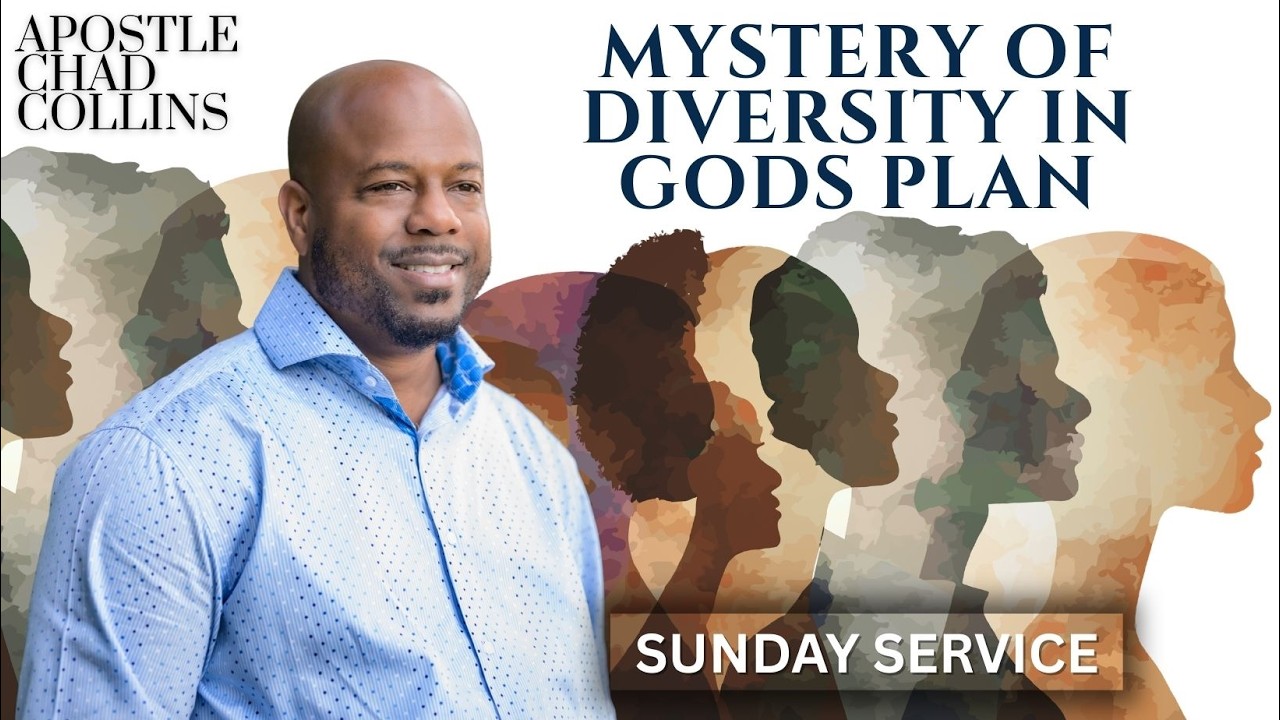
The story in Genesis 48 is short but seismic. Jacob on his deathbed adopts Joseph’s two sons, Ephraim and Manasseh, crosses his hands and intentionally places the blessing of the firstborn on the younger, Ephraim. That odd gesture carries prophetic weight across millennia. It points to adoption, to a firstborn blessing that transcends bloodlines, and to a plan in which God forms a people drawn from every ethnicity. I want to unpack that passage theologically and plainly, show how it connects to the cross of Christ, and explain why diversity in the church must always be married to holiness.
1. Reading Genesis 48: what happens and why it matters
In Genesis 48 Jacob (also called Israel) sees Joseph’s two sons and says, bring them close so I can bless them. Though his eyes are dim with age, Jacob adopts them as his own. He lays his right hand on Ephraim’s head, the younger, and his left on Manasseh, the firstborn. Joseph tries to correct him — “Not so, my father; the firstborn should get the right hand” — but Jacob insists. He prophesies that both will be blessed, that Manasseh will become a people and be great, but that Ephraim will be greater and “become a multitude of nations.”
The key elements that Christians should notice are adoption, the transfer of birthright, and the language of “nations.” These are not isolated Old Testament curiosities. They are prophetic pointers toward God’s unfolding plan to create a covenant people not limited by ethnicity.
2. Adoption and the firstborn blessing explained
In Israelite custom the firstborn carried a double portion and a special leadership role within the family. The “right of the firstborn” was both material and spiritual: it included responsibility to steward the family inheritance and to act as an elder brother who ensures the welfare of the siblings.
When Jacob adopts Ephraim and Manasseh, he is doing more than giving land. He is transferring identity and destiny. Ephraim, though a grandson and the younger son, receives the blessing normally reserved for the elder. That transfer is prophetic: God can confer heritage and purpose beyond natural lineage. This is precisely the ministry of adoption God carries out in Christ.
3. Ephraim as “a multitude of nations” — meaning and implications
The phrase “multitude of nations” in Jacob’s blessing is better understood as a promise of ethnic and cultural breadth. The Hebrew points to peoples and tribes. In the ancient story this blessing explains Israel’s complex future: Ephraim’s descendants would scatter, become many, and influence many peoples. In Christian theology it becomes a matrix for understanding how the covenant people of God is enlarged through adoption to include Gentiles.
Two New Testament moments make this plain:
- Acts 2: the Spirit falls on a diverse upper room and those present are identified in the hearing as “men from every nation under heaven.” The Spirit’s arrival on Pentecost is a sign that God’s covenant is now multicolored.
- Acts 13 and the Antioch church: the early church was ethnically mixed, and leaders named in Acts 13 are identified by ethnic or regional background—Barnabas, Lucius of Cyrene, Simeon called Niger—showing that diversity is a mark of normal early Christian life.
4. The cross as the mechanism of adoption
Jacob’s crossing of hands is a prophetic image. The cross of Christ is the historic act that makes adoption possible for Jews and Gentiles alike. Through the cross we are grafted into the family of God. Paul uses the language of adoption—sonship and inheritance—again and again to describe what Christ accomplishes for us.
Theologically, the cross does three essential things for diversity:
- It secures reconciliation between God and sinners so that a holy people can be formed from every background.
- It removes the barrier of ethnic privilege. The firstborn blessing is now extended by the risen King to those who will follow him, irrespective of nation.
- It creates a new social fabric for the people of God: a family formed by repentance and faith, not by ancestry.
When Jacob put his right hand on Ephraim, he pictured the cross-centered reality where the blessing is given not by blood but by God’s gracious choice. That is why the Great Commission moves outward to all nations: the adoption at the cross is also a sending of adopted sons and daughters to declare the kingdom.
5. Jesus as the elder brother and distribution of inheritance
In biblical metaphors Jesus is often pictured as the Son of David, the royal heir, and also as our elder brother. The elder brother role matters because he enacts and secures the inheritance for the family. When Scripture says we are “seated together with him,” it is echoing the firstborn role that protects and administers the family heritage.
The story of Moses and Joshua illustrates how the birthright has corporate consequences. Moses, of Levi, could not enter the promised land, but Joshua, an Ephraimite, led the people in because the birthright and leadership passed in ways that respected God’s ordering. God is purposeful about order. The cross does not abolish order; it reorders relations around Christ. That reordering requires humility and submission.
6. Why diversity must be tied to holiness
Diversity is a means, not an end. The great purpose of the Gentile inclusion is that a holy, set-apart people would worship God and display his character among the nations. The blessing Jacob gave was not a license for moral laxity or cultural syncretism. The multicultural church must be a holy church.
Holiness matters because:
- The cross cleanses; it does not cheapen obedience. Inclusion without adherence to God’s commands becomes hypocrisy.
- True unity is rooted in the first commandment: love the Lord with everything and love your neighbor as yourself. That love is expressed by holiness of life.
- Cultural distinctives are redeemed and sanctified when surrendered to Christ. We keep what honors God and repent of what dishonors him.
7. How the cross breaks racial and cultural barriers
The heart of Christian social theology is the conviction that there are no insurmountable barriers between peoples in Christ. The cross enacts three liberations:
- Forgiveness: The cross removes sin as the primary divider.
- New identity: Baptism and faith make believers part of the family; ethnicity no longer dictates spiritual belonging.
- Commission: The church is sent to make disciples of all nations, showing that Christ’s reign is universal.
But this liberation is not a license for moral relativism. The love that flows from the cross demands conformity to the image of Christ. Cultural practices that contradict holiness must be repented of. Cultural practices that honor God are welcomed and can enrich the church.
8. Order, authority, and relationships in the Spirit
God ordains relationships—fathers, spiritual fathers, elder brothers, and pastors—to preserve order and promote the flourishing of the body. That order is not about domination; it is about stewardship. An elder brother carries responsibility to ensure inheritance is distributed rightly. A father provides vision and protection. Both must work in humility.
Pride masks itself as independence. Humility recognizes when someone walks ahead in the thing you are called to and honors that place. This keeps ministry from devolving into strife and competition. The Spirit coordinates relationships so the church can be effective in its witness across cultures.
9. Practical steps for churches and believers
The theology is glorious, but what about practice? Here are concrete steps to live the Ephraim blessing in a way that honors God’s holiness:
- Repent and return to the first commandment. Love God and love your neighbor. This must precede any programmatic diversity initiative.
- Cultivate humility. Value spiritual order. Honor spiritual fathers and recognize elder brothers when the Lord places them.
- Embrace multicultural leadership. Ensure leadership tables include varied ethnicities and backgrounds, not as tokenism but as genuine stewardship of gifts.
- Promote sanctified cultural expression. Allow cultural music, dress, and language that honor God and do not contradict Scripture.
- Teach adoption theology. Help people understand they are adopted by God and inherit with Christ.
- Practice intentional hospitality. Learn one another’s stories, repent of complicity in injustice, and put love into acts that cross cultural lines.
10. The risk of ignoring this call
The church at Ephesus received a sharp rebuke in Revelation because it had left its first love. When the first commandment is neglected, the candlestick is in danger of being removed. A church that is ethnically uniform because of indifference, prejudice, or comfort loses prophetic power. God called the church to be a light to every tribe and tongue. If the light dims, the message weakens.
11. Conclusion: live the Ephraim blessing with holiness
Genesis 48 is not a mere ancestral footnote. It is a theological seed that blossoms through the cross into a global harvest. The blessing given to Ephraim announces a people that would be many nations, drawn together by adoption. The mechanism is the cross. The fruit is diverse worshippers, sanctified and set apart. The mandate is love.
My call to you is simple and urgent. Receive your identity in Christ. Embrace God’s multicultural vision without compromising holiness. Walk in humility within spiritual order. Love your neighbor as you love yourself, and make room at the table for every nation that repents and believes.
Frequently Asked Questions
What does Jacob crossing his hands over Ephraim and Manasseh mean?
Jacob’s crossing of hands was a symbolic, prophetic act. He intentionally placed the blessing of the right hand—the birthright—on the younger, Ephraim. The gesture foretells God’s sovereign ability to transfer inheritance and destiny. It pictures how God can adopt and bless outside usual lines of ancestry, pointing forward to the cross where Gentiles are grafted into God’s family.
How does the firstborn blessing relate to the church today?
The firstborn blessing includes stewardship of inheritance and leadership in distributing blessing to the family. In Christ the church shares in that inheritance. The blessing calls us to care for others’ spiritual welfare, to steward truth and grace, and to be a conduit of God’s promises to many peoples. It also frames Jesus as the elder brother who secures the inheritance for all redeemed sons and daughters.
Why must diversity be tied to holiness?
Diversity without repentance and holiness can become compromise or syncretism. The gospel unites people from differing cultures, but the unity must be shaped by the Spirit toward Christlike living. Holiness keeps the church faithful to God’s commands and ensures that cultural expressions are redeemed rather than celebrated at the expense of obedience.
Is the multicultural church modeled in the New Testament?
Yes. The book of Acts records the Spirit falling on Pentecost with people hearing in their own tongues. Antioch’s church leadership included people identified by region and ethnicity. Revelation shows a great multitude from every nation, tribe, people, and language standing before the Lamb. The New Testament frames the church as inherently multicultural.
How should local churches begin to live out this vision?
Start with repentance and teaching on adoption. Intentionally include diverse leaders, create worship that allows multiple cultural expressions, practice hospitality, and teach holiness alongside inclusion. Ensure conflict is handled with humility and respect for God-ordained order so the church can be a credible witness to a divided world.
Scripture references to explore
- Genesis 48 — Jacob’s blessing of Ephraim and Manasseh
- Acts 2 — Pentecost and the many tongues
- Acts 13 — Antioch and diverse leadership
- Revelation 7 and 21 — a great multitude from every nation
- Romans 8–9 — adoption, inheritance, and God’s sovereign mercy
Embrace the mystery God revealed in Genesis 48. Let the cross reshape your identity and your relationships. Seek holiness, pursue unity, and be a people who embody the blessing of Ephraim: a holy, diverse, and faithful multitude for the glory of God.